What Is Fort Bliss Security Clearance & Military Criminal Defense?
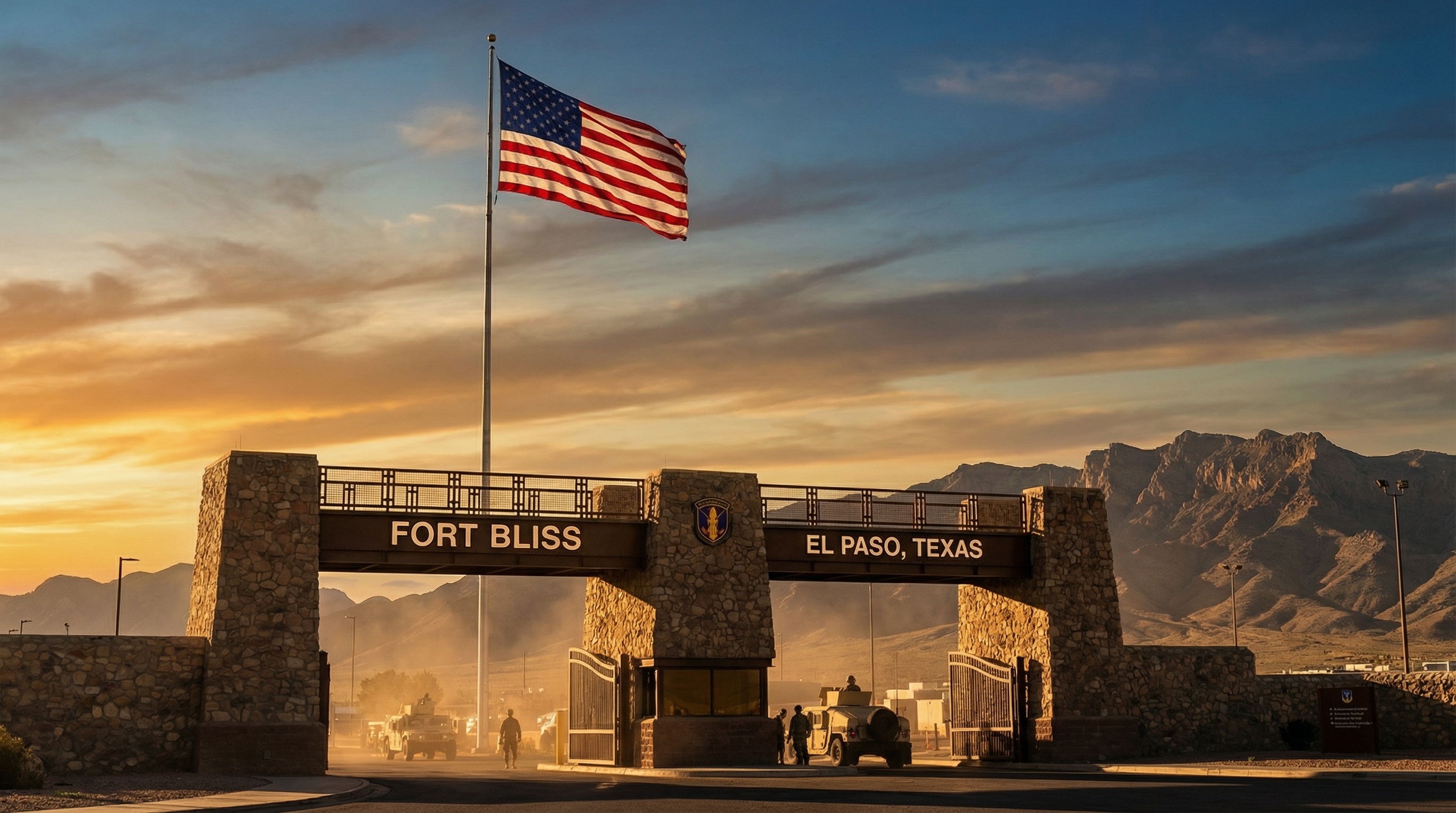
Fort Bliss is one of the largest military installations in the United States, covering approximately 1.1 million acres across El Paso County and southern New Mexico. It is home to the 1st Armored Division, the 32nd Army Air and Missile Defense Command, the U.S. Army Sergeants Major Academy, and William Beaumont Army Medical Center — collectively employing tens of thousands of active-duty soldiers, Army civilians, DoD contractors, and family members in the El Paso area. A security clearance is a federal determination that an individual is trustworthy and reliable enough to access classified national security information. Security clearances are governed by Executive Order 12968 and adjudicated under the 13 Adjudicative Guidelines established by the Office of the Director of National Intelligence (ODNI). The most common clearance levels are Confidential, Secret, and Top Secret/Sensitive Compartmented Information (TS/SCI). When a Fort Bliss soldier or DoD employee is arrested for any criminal offense — DWI, assault, drug possession, theft, domestic violence, or any other charge — the arrest triggers a mandatory self-reporting obligation under security clearance regulations. Failure to report an arrest can itself result in clearance revocation for lack of candor. Once reported, the Defense Counterintelligence and Security Agency (DCSA) — formerly the Defense Security Service — reviews the arrest and may initiate a Statement of Reasons (SOR) proposing to revoke or deny the clearance. The critical insight that most people miss is this: the outcome of the criminal case in El Paso County Court directly affects the security clearance adjudication. A dismissal, a not-guilty verdict, or a reduction to a non-criminal charge dramatically improves the security clearance outcome. A conviction — especially for a drug offense, a crime of violence, or a second DWI — can be disqualifying under the Adjudicative Guidelines. This is why fighting the criminal charge aggressively from the very first day is the single most important thing a Fort Bliss service member or DoD employee can do to protect their security clearance.
Penalties in Texas — What You Are Facing
The consequences of a criminal conviction for a Fort Bliss service member or DoD employee extend far beyond the Texas criminal justice system. Under the 13 Adjudicative Guidelines, the following criminal conduct is most likely to result in security clearance revocation or denial: Drug involvement (Guideline H) is the most common clearance-disqualifying offense. Any conviction for drug possession, distribution, or manufacture — including marijuana, which remains a Schedule I controlled substance under federal law regardless of state law — is a serious disqualifying condition. Even a single drug arrest without conviction can raise concerns if not properly mitigated. Criminal conduct (Guideline J) covers any pattern of criminal activity or a single serious crime. A felony conviction is almost always disqualifying. Multiple misdemeanor convictions — even for relatively minor offenses — can establish a pattern of disregard for the law that raises serious concerns. A DWI conviction, particularly a second or subsequent offense, falls squarely within Guideline J and can result in clearance revocation. Alcohol consumption (Guideline G) is a specific concern for DWI and alcohol-related offenses. A single DWI can raise Guideline G concerns; a second DWI is a strong indicator of an alcohol problem that is likely to result in clearance revocation absent compelling mitigation. Personal conduct (Guideline E) covers dishonesty, including failure to report an arrest or providing false information on a security clearance application (SF-86). Lack of candor is one of the most serious clearance concerns and can result in permanent disqualification. Beyond the security clearance, a criminal conviction can trigger administrative separation from the Army under Army Regulation 635-200, nonjudicial punishment under Article 15 of the Uniform Code of Military Justice (UCMJ), or referral to a court-martial. For DoD contractors, a criminal conviction can result in loss of access to Fort Bliss, termination of employment, and loss of the federal contract that supports the job. The financial consequences — including lost salary, lost retirement benefits, and lost security clearance premium pay — can easily exceed hundreds of thousands of dollars over a career.
Don't face Fort Bliss Security Clearance & Military Criminal Defense charges alone in El Paso, TX.
Attorney Aaronson has 45+ years defending El Paso residents. Free consultation — no obligation.
The Legal Process in El Paso, Texas
When a Fort Bliss service member or DoD employee is arrested in El Paso, multiple legal processes begin simultaneously, and managing all of them requires an attorney who understands each one. The Texas criminal case proceeds in El Paso County Court at Law (for misdemeanors) or El Paso County District Court (for felonies). This is the most urgent priority — the outcome of the criminal case is the single most important factor in the security clearance adjudication. Attorney Aaronson files motions to suppress evidence, challenges the legality of the arrest, and pursues every available defense to achieve the best possible outcome in the criminal case. A dismissal, acquittal, or reduction to a non-criminal charge provides powerful mitigation in the security clearance process. The security clearance process begins when the service member or employee self-reports the arrest on their security clearance paperwork. DCSA reviews the report and may issue a Letter of Intent (LOI) or Statement of Reasons (SOR) proposing adverse action on the clearance. The individual has the right to respond in writing and to request a hearing before a Defense Office of Hearings and Appeals (DOHA) Administrative Judge. Attorney Aaronson assists clients in preparing comprehensive written responses and hearing presentations that address each Adjudicative Guideline concern with specific mitigating evidence. For active-duty soldiers, the unit commander may also initiate administrative proceedings — including a bar to reenlistment, a relief for cause evaluation report, or administrative separation proceedings under AR 635-200. These proceedings are separate from both the criminal case and the security clearance process, and each has its own timeline, procedures, and appeal rights. Attorney Aaronson coordinates the defense strategy across all three tracks to present the most consistent and compelling case for the client's continued service and clearance.
Defense Strategies That Work in El Paso Courts
Defending a Fort Bliss service member or DoD employee facing criminal charges requires a strategy that addresses both the Texas criminal case and the security clearance consequences simultaneously. In the criminal case, Attorney Aaronson pursues every available defense with the same rigor he applies to any serious criminal charge — challenging the legality of the traffic stop or arrest, suppressing illegally obtained evidence, contesting the reliability of chemical test results, and presenting mitigating evidence at sentencing. The goal is always the best possible outcome in the criminal case, because that outcome directly shapes the security clearance adjudication. For security clearance purposes, the most powerful mitigation evidence includes: a favorable outcome in the criminal case (dismissal, acquittal, or reduction); documented completion of alcohol or drug treatment programs; letters of support from commanding officers, supervisors, and colleagues; a clean record of military service; and a credible, detailed explanation of the circumstances that led to the arrest and the steps taken to ensure it will not happen again. Attorney Aaronson works with clients to assemble this mitigation package from the earliest stages of the case — not as an afterthought after the criminal case is resolved. For clients who have already received a Statement of Reasons proposing clearance revocation, Attorney Aaronson prepares a comprehensive written response that addresses each disqualifying condition identified in the SOR with specific mitigating evidence under the applicable Adjudicative Guideline. If a DOHA hearing is requested, he prepares the client for testimony and presents the mitigation case before the Administrative Judge. The DOHA appeal process can take 12 to 18 months, and having experienced legal representation at every stage significantly improves the outcome.
Why Choose Aaronson Law Firm for Fort Bliss Security Clearance & Military Criminal Defense in El Paso
Attorney Gary Aaronson has defended Fort Bliss soldiers, Army civilians, DoD contractors, and veterans in El Paso for over 45 years. He has represented clients from every unit and installation on Fort Bliss — from the 1st Armored Division to the Sergeants Major Academy to William Beaumont Army Medical Center — as well as clients from Biggs Army Airfield, White Sands Missile Range, and Holloman Air Force Base. He understands the unique pressures that military personnel face when charged with a crime in El Paso: the mandatory self-reporting obligation, the dual-track proceedings in both the civilian courts and the military administrative system, the tight timelines imposed by military regulations, and the career consequences that can flow from even a misdemeanor conviction. He has helped Fort Bliss clients achieve dismissals, acquittals, and charge reductions that preserved their security clearances, their military careers, and their retirement benefits. His office is located in El Paso, minutes from Fort Bliss's main gate on Pleasonton Road and the El Paso County courts where military personnel are prosecuted. He is available 24/7 for urgent matters — because a DWI arrest at 2 a.m. on a Saturday night cannot wait until Monday morning when a security clearance review may be triggered by Monday's self-report. When you call Aaronson Law Firm, you reach attorney Aaronson directly — not a call center, not an answering service, not a paralegal.

Frequently Asked Questions About Fort Bliss Security Clearance & Military Criminal Defense in El Paso
Related Charges & Defenses
Related Practice Areas
Official Resources
A criminal charge in El Paso can end your military career at Fort Bliss.
Do not wait. Do not talk to investigators without an attorney. Call Aaronson Law Firm at (915) 533-0110 right now for a free, confidential consultation. We defend Fort Bliss soldiers, Army civilians, DoD contractors, and veterans throughout El Paso, 24 hours a day, 7 days a week.
Available 24/7 for urgent matters · 45+ years defending El Paso residents